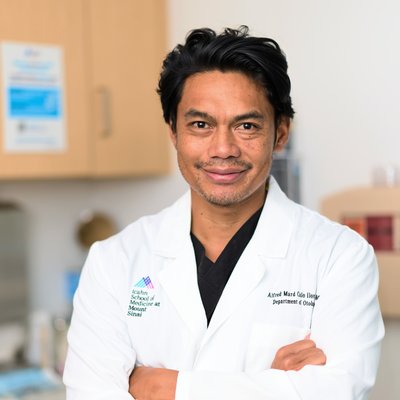
The nose as a surgical corridor.
The anterior skull base — the shelf of bone separating the nasal cavity and sinuses from the brain — was historically reached by opening the skull. Endoscopic endonasal surgery changed that. A high-definition endoscope and dedicated instruments pass through the nostrils, across the sinuses, and directly to the lesion, giving the surgical team a magnified, panoramic view of anatomy that open approaches see only at an angle.
The advantages are concrete: no craniotomy, no brain retraction, no facial incisions, shorter hospital stays, and faster return to life. The corridor is also expansible — from the pituitary sella out to the cribriform plate, planum, clivus, and infratemporal fossa — which is what the word "expanded" in expanded endonasal approaches means.
It is a genuinely two-specialty operation, and that structure is not incidental — it is the safety mechanism. The rhinologic surgeon opens and manages the corridor and performs the reconstruction; the neurosurgeon resects the tumor. Four expert hands, two perspectives, every case.
From the sella to the sinonasal cavity.
Pituitary adenomas
The most common skull base tumor — usually benign, but consequential through hormone secretion (prolactinomas, acromegaly, Cushing disease) or compression of the optic chiasm. Surgery is coordinated with Mount Sinai endocrinology and neuro-ophthalmology before and after the operation.
Meningiomas and craniopharyngiomas
Anterior skull base meningiomas (olfactory groove, planum, tuberculum) and craniopharyngiomas in selected locations are resected through expanded endonasal corridors when the anatomy favors it.
Sinonasal tumors
Inverted papilloma, esthesioneuroblastoma (olfactory neuroblastoma), adenoid cystic carcinoma, and other benign and malignant tumors of the nasal cavity and paranasal sinuses — managed with oncologic margins, multidisciplinary tumor board review, and coordination with radiation and medical oncology when indicated.
CSF leaks, encephaloceles, and skull base defects
Spontaneous and post-surgical leaks are repaired endoscopically with multilayered reconstruction. A dedicated page covers CSF leak repair →
Orbital and infratemporal fossa lesions
Selected tumors of the orbit and deep facial compartments reached through endoscopic and combined corridors.
Navigation, augmented reality, fluorescence.
Every case runs on CT- and MRI-referenced surgical navigation — the instruments are tracked in real time against your own imaging, not a textbook average. On top of that foundation, the Mount Sinai team deploys technology that few centers use routinely:
- Augmented-reality visualization — overlaying navigation data directly onto the operative view, including HoloLens-based mixed-reality platforms for planning and intraoperative guidance; work that has been featured in national press
- Intraoperative fluorescence — research protocols, including 5-ALA fluorescence-guided techniques, aimed at making tumor tissue visibly distinct from normal tissue at the margins
- Vascularized reconstruction — the nasoseptal flap and its alternatives, which transformed the safety of large skull base defect repairs and made expanded approaches routinely feasible
The same research engine that builds these tools — an NIH-funded program in surgical innovation and olfactory neuroscience — runs through the research arm of the practice.
Before, during, and after.
Before. Workup typically includes MRI, endocrine labs for pituitary lesions, visual field testing when the optic apparatus is involved, and an office nasal endoscopy to map the corridor. Every tumor case is reviewed by the multidisciplinary skull base team; imaging review for out-of-town patients can usually be arranged before travel.
During. The operation is performed under general anesthesia in the hospital OR at Mount Sinai with the full two-surgeon team. Duration ranges from roughly two hours for a straightforward pituitary case to considerably longer for expanded approaches with reconstruction.
After. Most patients spend two to three nights in the hospital — pituitary cases with endocrine and fluid-balance monitoring. There are no external incisions to heal; the work of recovery happens inside the nose. Saline irrigations and a schedule of office endoscopic clean-outs keep the corridor healing well, and most patients return to non-strenuous work within two to three weeks. Sense of smell is deliberately protected in corridor design whenever the tumor allows it — a priority that reflects the practice's olfaction research.
For physicians and second opinions.
Referrals come from ENTs, neurosurgeons, endocrinologists, ophthalmologists, and oncologists across the region — and from patients seeking second opinions on tumors deemed unresectable or high-risk elsewhere. Operability depends heavily on the team's corridor options and reconstruction capability; a second look is frequently worthwhile.
Physicians: imaging review and urgent slots are available. See the referring physician page or call 212-241-9410 directly.
Common questions, direct answers.
What does 'endoscopic endonasal' actually mean?
It means the surgery is performed entirely through the nostrils using a high-definition endoscope and dedicated instruments — no incisions on the face or scalp, no craniotomy, no brain retraction. The nose and sinuses become the surgical corridor to the skull base, and a rhinologic surgeon and neurosurgeon operate together as a two-surgeon team.
Is endoscopic surgery as effective as open surgery for pituitary tumors?
For the great majority of pituitary adenomas and many other anterior skull base tumors, endoscopic endonasal surgery achieves equal or better tumor removal than open approaches, with lower morbidity, no external scars, and faster recovery. Some tumors — by size, location, or extension — still warrant open or combined approaches, and that triage is made honestly by the multidisciplinary team.
Why does a sinus surgeon operate on brain tumors?
Skull base surgery is a two-specialty operation. The rhinologic surgeon builds the corridor through the nose and sinuses, manages the sinonasal structures, and reconstructs the skull base at the end — including harvesting the nasoseptal flap that seals the defect. The neurosurgeon resects the tumor itself. Operating as a consistent team, case after case, is what produces excellent outcomes.
What technology is used during these operations?
Every case uses CT- and MRI-referenced surgical navigation and high-definition endoscopy. At Mount Sinai the team also deploys augmented-reality visualization — overlaying the navigation data onto the surgical view, including HoloLens-based platforms — and, for selected tumors, intraoperative fluorescence techniques under active research protocols to help distinguish tumor from normal tissue.
What is recovery like after endoscopic pituitary or skull base surgery?
Most patients spend two to three nights in the hospital, with endocrine and fluid-balance monitoring after pituitary cases. There are no external incisions. Nasal crusting and congestion during healing are expected and are managed with saline irrigations and scheduled endoscopic clean-outs in the office. Most patients are back to non-strenuous work within two to three weeks, avoiding heavy lifting and nose-blowing early on.
I was told my tumor is inoperable or too risky — is a second opinion worth it?
Often, yes. Operability is partly a function of the team's corridor options and reconstruction techniques, which vary substantially between centers. A tumor that is high-risk through one approach may be accessible through another. Second opinions on skull base tumors are routine at Mount Sinai, and imaging review can usually be arranged before you travel.
Related conditions & procedures.
- CSF Leak Repair — endoscopic repair of cerebrospinal fluid leaks and encephaloceles.
- Loss of Smell (Anosmia) — olfaction-preserving corridor design and smell research.
- Chronic Rhinosinusitis — inflammatory disease of the same anatomy.
- For Referring Physicians — how to send a case or request imaging review.