Alfred Iloreta, MD

About & research · Mount Sinai · New York City

A surgeon, scientist, and innovator.

Training, the care team, in-office surgical suites, research, teaching, and talks. Looking for care? Start with what brings you in.

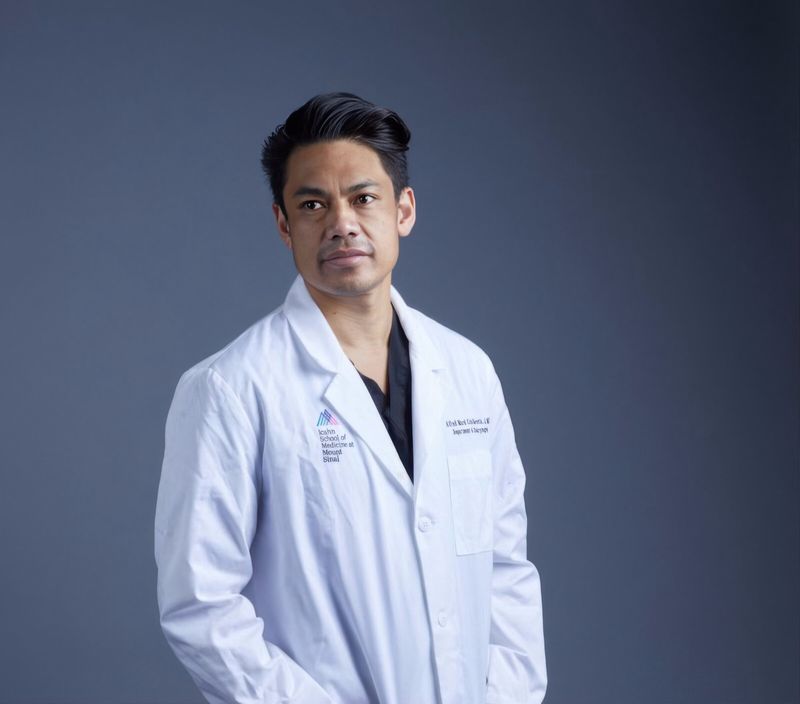
Dr. Alfred Iloreta, Mount Sinai sinus and skull base surgeon
Alfred Iloreta, MD212-241-9410
110+Peer-reviewed publications
20+Trials as PI
NIHR41 PI Award, 2024
2×Mount Sinai Teacher of the Year

01/About

Training & experience.

Dr. Alfred Iloreta is Co-Director of Endoscopic Skull Base Surgery at Mount Sinai Health System and Director of Rhinology and Skull Base Research. He holds a triple Assistant Professor appointment at the Icahn School of Medicine at Mount Sinai — in Otolaryngology, Neurosurgery, and Artificial Intelligence & Human Health. His clinical focus is endoscopic and open surgery for paranasal sinus and skull base tumors, orbital tumors, and CSF leaks, alongside advanced therapies for inflammatory sinus disease.

As an investigator, he leads research on neurostimulation for pain and stroke, intraoperative tumor fluorescence, and the neuroplasticity of the olfactory epithelium. He is co-founder of Pharyvac Surgical Technology and a clinical collaborator at Sinai Biodesign, the institution's biotech accelerator.

02/How I work with you

Options, not orders.

Every patient who walks in has different priorities — recovery time, anesthesia tolerance, willingness to try medical management first. My job is to lay out every reasonable path and help you choose the one that's right for your life. Surgery is offered when it's the right answer — never as the default.

  1. i.

    Listen first.

    Every visit starts with the time to actually understand what's wrong — symptoms, history, what you've already tried. Most diagnoses come from the conversation, not the scan.

  2. ii.

    Present the options.

    Medical, surgical, in-office, hospital OR — every reasonable path is laid out with the trade-offs. You leave understanding what's available, not feeling rushed to a decision.

  3. iii.

    Use the least invasive technique.

    Endoscopic, image-guided, through the natural openings of the nose — no facial incisions, faster recovery. When appropriate, performed in-office to skip the hospital entirely.

  4. iv.

    Stay with you after surgery.

    Clear post-op instructions, recovery support, and direct access. The operation is one part — the rest is making sure your healing goes smoothly.

03/The team

Who you'll actually see.

Specialty care is a team effort — and the team you meet matters as much as the surgeon. Every visit, before and after surgery, is supported by clinical and research staff who know your case and follow you closely.

Care team

Yaniz Melendez

Care team

Alex Ferrera

04/Technology & innovation

Where surgery happens.

For many patients, complex sinus and skull base care doesn't have to mean a hospital. Two dedicated in-office surgical suites — outfitted with the same precision technology used in the OR — make care faster, calmer, and often more affordable. For the cases that do belong in the hospital, we bring advanced imaging, augmented reality, and AI to the table.

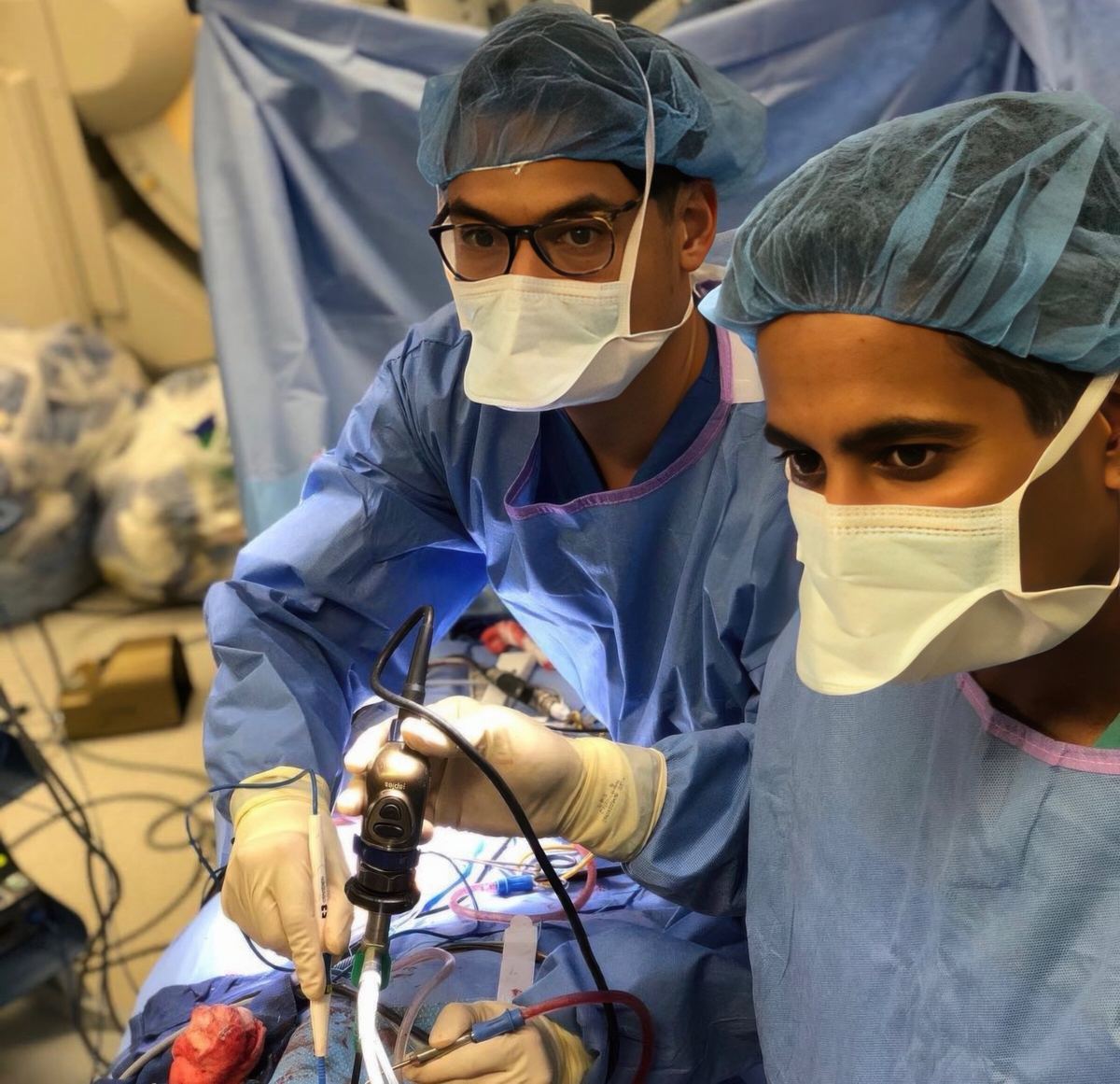
Dr. Alfred Iloreta and surgical team performing endoscopic sinus and skull base surgery in the operating room at Mount Sinai
In the OR — endoscopic skull base resection at Mount Sinai. Image-guided navigation, 4K endoscopy, and shared visualization, in real time.

In-office surgical suites.

Two dedicated rooms, hospital-grade equipment, no hospital booking — many patients leave the same morning.
Endoscopic sinus surgery
Revision sinus surgery & second opinions

  • a.

    Image-guided navigation Precision

    Real-time 3D positioning during sinus and skull base work — the same navigation used in the hospital OR.

  • b.

    4K endoscopic visualization Clarity

    Magnification beyond what the human eye can see, so even subtle anatomy is treated precisely.

  • c.

    Neptune fluid management Clean field

    Professional-grade suction system keeps the surgical field clear and the room sterile.

  • d.

    Pronox® analgesia No IV

    Patient-administered nitrous oxide — comfortable, fast on, fast off. No general anesthesia required for most in-office cases.

Innovation in the operating room.

For complex skull base cases, my work in artificial intelligence and mixed reality goes from publication to operating room.

  • a.

    Mixed reality with HoloLens AR overlay

    Holographic mapping of the internal carotid artery, cranial nerves, and tumor boundaries — overlaid on the live operative field during endoscopic skull base surgery.

  • b.

    Shared OR display (Surgical Theater) Team-based

    Otolaryngology, Neurosurgery, OMFS, and Microvascular Reconstruction reference the same real-time anatomy on a unified display — eliminating verbal handoff confusion at critical moments.

  • c.

    5-ALA / Gleolan® fluorescence First-in-field

    First-in-field clinical study of systemic 5-aminolevulinic acid for head & neck squamous cell carcinoma — 5 of 6 patients with robust intraoperative tumor fluorescence at the margin.

  • d.

    Raman spectroscopy Sci. Reports 2025

    Label-free real-time tissue chemistry — H&E-equivalent margin imaging in seconds versus 20–30 minutes for frozen section.

Philosophy

"What the team sees together determines what they can do together."

From "Seeing Together" — invited lecture on team-based skull base visualization

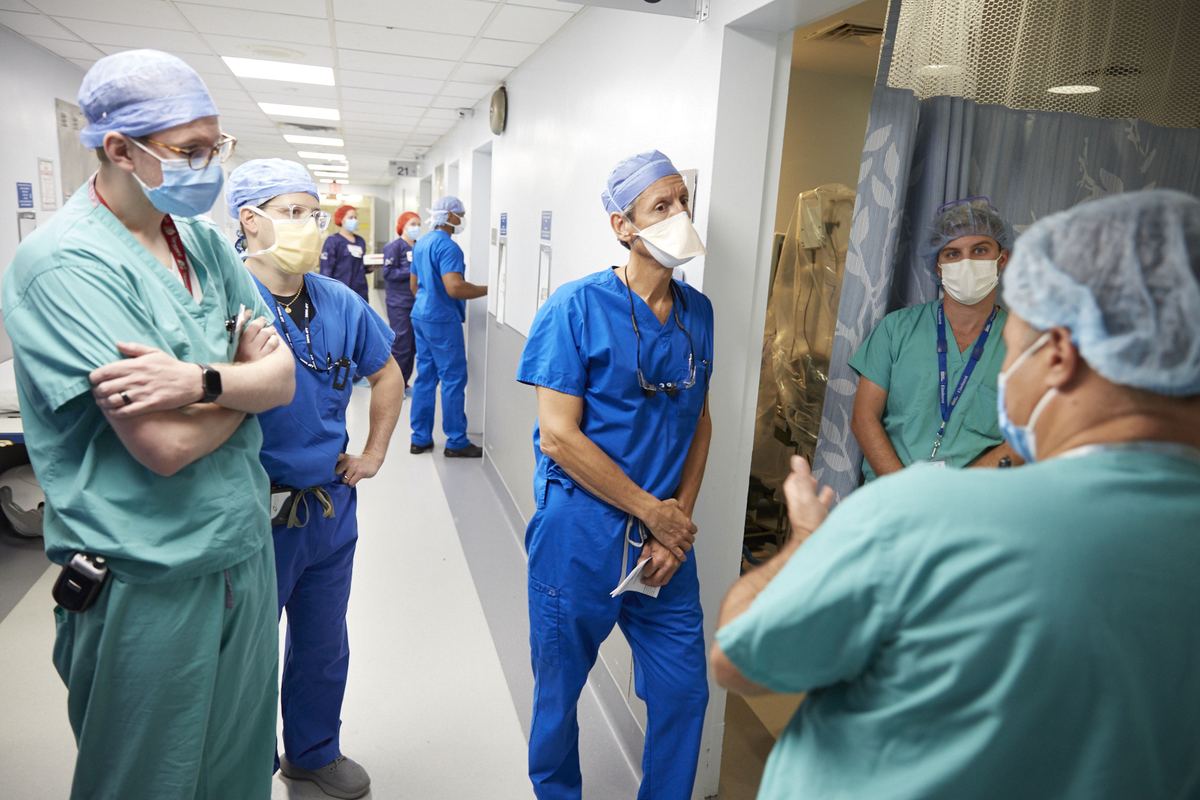
Clinicians talking in a hospital corridor
Between cases
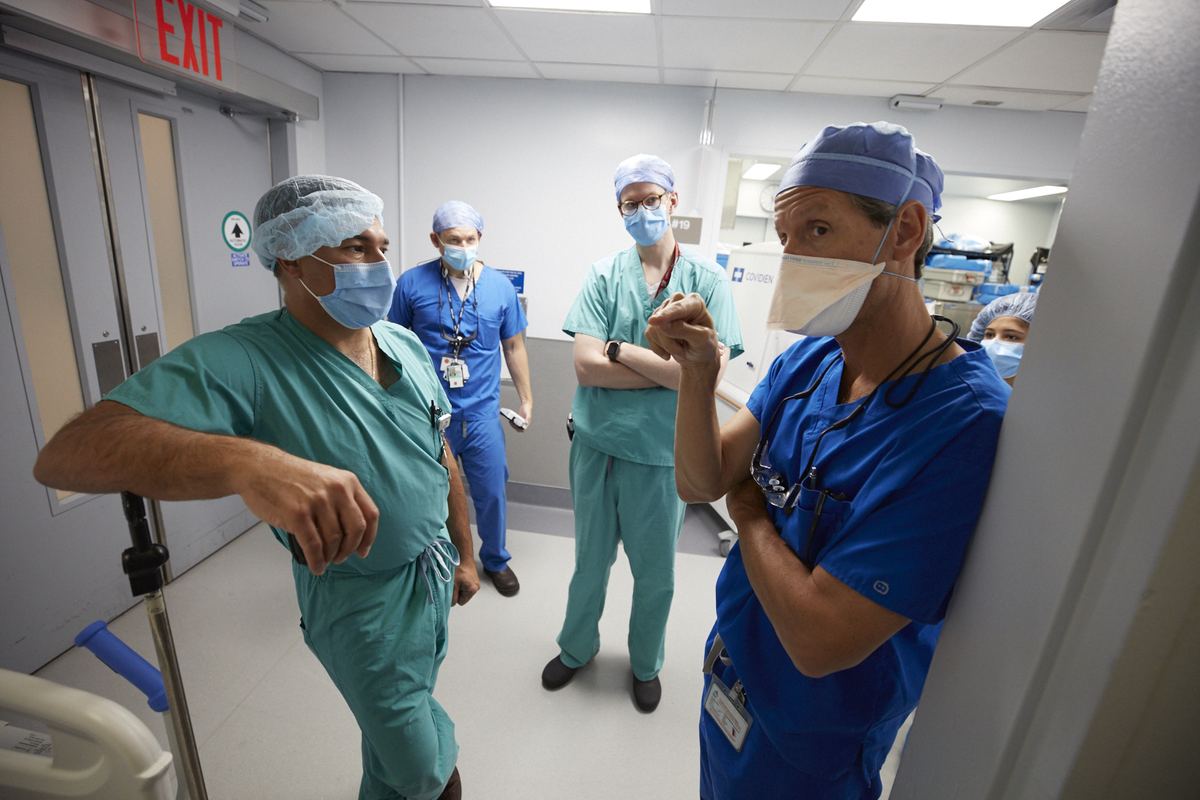
Clinicians in conversation in a hospital corridor
Rounds at Mount Sinai
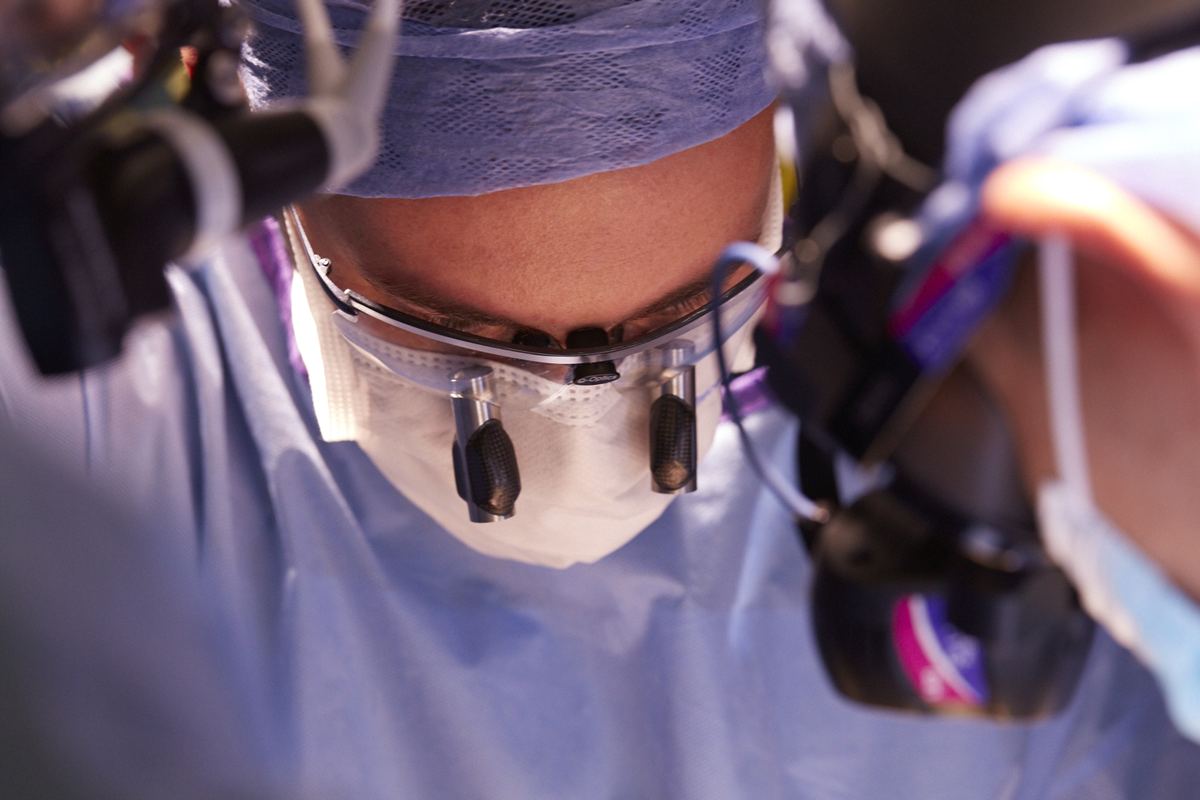
A surgeon wearing magnifying loupes during an operation
Endoscopic surgery at Mount Sinai

05/Mentorship & education

Training the next generation of surgeons and scientists.

Within Mount Sinai's training pipeline, my teaching focuses on chief residents and fellows — trainees at the most advanced, formative stage of their careers, when surgical judgment and philosophy are being set. Mentorship is the second half of the academic mission.

7

Clinical fellows

Trained in Rhinology & Endoscopic Skull Base Surgery — now practicing across the country.

10

Research fellows

Year-long appointments contributing to the lab's publication pipeline and the methodological habits of surgeon-scientists.

Biodesign

Sinai accelerator

Working with engineers and entrepreneurs in Mount Sinai's biotech accelerator on early-stage surgical device innovation.

Chiefs & Fellows

Primary teaching focus

Most advanced stage of training — where judgment and surgical philosophy are formed, not technique alone.

Two-time recipient of the Mount Sinai Department of Otolaryngology Head and Neck Surgery Teacher of the Year Award (2019, plus prior Resident Teacher of the Year, 2012–2013).

06/Research & Innovation

Research to advance surgical care.

Active clinical and translational research in surgical innovation. 110+ peer-reviewed publications, primary investigator on 20+ investigator-initiated clinical trials, multiple industry-sponsored studies, and the Director of Research for the Division of Rhinology & Endoscopic Skull Base Surgery at Mount Sinai.

  • 04

    Neurostimulation & devices

    Patent-pending neuromodulation system; Pharyvac surgical aspirator (USPTO 63/037,930).

07/Selected cases

Recent multi-disciplinary skull base resections.

Two representative infratemporal fossa cases coordinated across Mount Sinai's skull base team — both leveraging mixed reality, image-guided navigation, and shared visualization.

Case 01: ITF, cavernous sinus extension

86-year-old female, progressive visual loss

Expansile ITF mass with cavernous sinus extension; lateral skull base access required. Multi-team approach planned in a shared 3D digital twin pre-operatively — every surgeon entered the OR with the same spatial model.

Outcome. Gross total resection. Internal carotid artery preserved. Negative frozen-section margins. HoloLens holographic ICA overlay maintained spatial awareness throughout dissection.
Case 02: 4-team coordination

34-year-old male, osteosarcoma

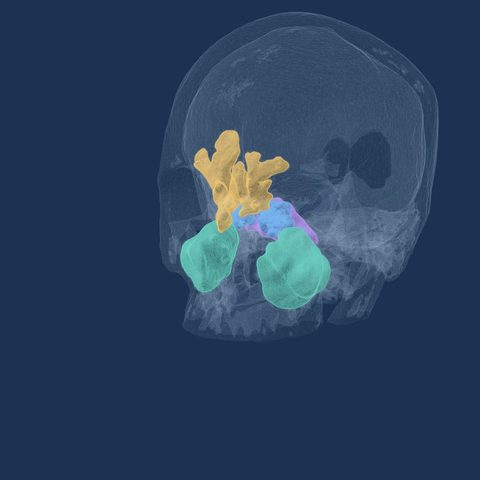
Bilateral nasal cavity, orbit, maxilla, ITF, and middle cranial fossa involvement. Coordinated approach across Rhinology, Neurosurgery, OMFS, and Microvascular Reconstruction.

Outcome. R0 negative-margin resection. Orbit preserved. No vascular injury. Mixed reality and 3D modeling enabled a morbidity-minimizing transmaxillary corridor that avoided mandibular osteotomy and parotid translocation.

08/Selected surgical videos

Technique in motion.

Endoscopic technique from the operating room — selected cases of sinus and skull base surgery, including a pediatric nasal dermoid resection, juvenile nasopharyngeal angiofibroma (JNA), and SonoPet ultrasonic technique.

09/In the news

Press & selected media.

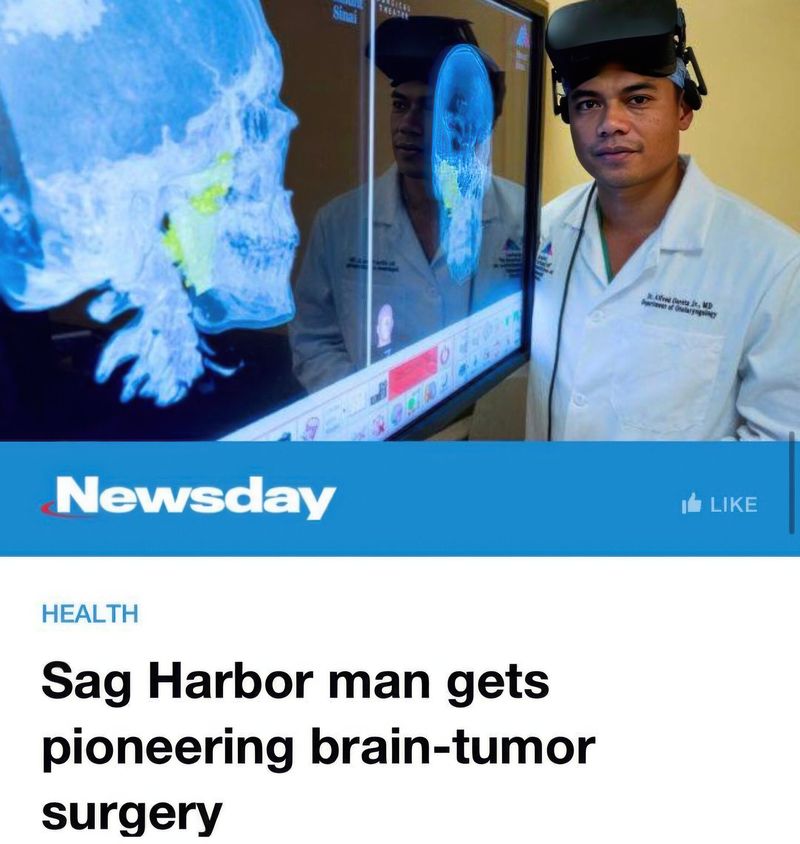
Coverage of the work at Mount Sinai and beyond.

10/Selected lectures

Speaking on the future of surgery.

Invited lectures on Surgical Intelligence, mixed reality in skull base surgery, and fluorescence-guided oncology.

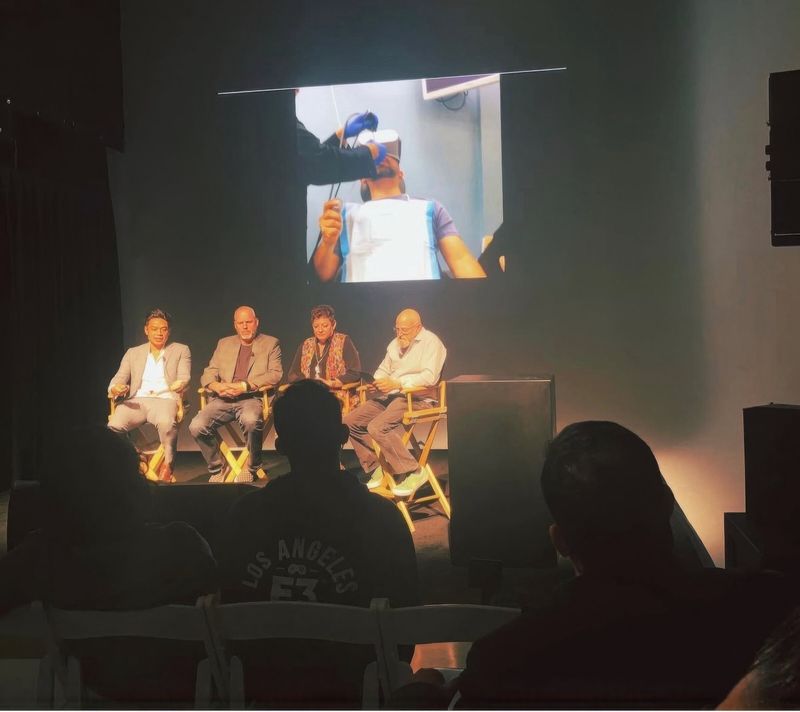
Dr. Alfred Iloreta on stage during a keynote panel on mixed reality and augmented reality in skull base surgery
On stage — keynote panel on mixed reality and augmented reality in surgery, with intraoperative AR footage projected behind.

Surgical Intelligence

Surgical Intelligence: The Future or An Oxymoron

A foundational framework for using AI, computer vision, and neural networks to connect patient data, surgical methodology, and outcomes.

Video coming soon

5-ALA · Fluorescence

5-ALA Fluorescence-Guided Surgery for Skull Base Tumor Margins

First-in-field clinical study of systemic 5-aminolevulinic acid for HNSCC — five of six patients with robust intraoperative tumor fluorescence at the margin.

Video coming soon

Augmented reality · VMED 2022

Use of Augmented Reality in Skull Base Surgery

Talk delivered at Virtual Medicine 2022 — practical experience overlaying carotid, cranial nerves, and tumor boundaries onto the live operative field during endoscopic skull base resection.

Watch on YouTube

Additional lecture videos forthcoming.

11/Connect & profiles

For colleagues and curious researchers.

Find publications, scholarly work, recognition, and clinical credentials across the platforms below.

Considering a second opinion or a new approach to a stubborn problem? Let's talk.